Weed Spotlight: Bindweed – The Vine That Won't Quit
If you've ever noticed a vine-like weed winding its way through your lawn, garden beds, shrubs, or fences, there's a good chance you're dealing with bindweed.
Often mistaken for a harmless flowering plant, bindweed is one of the most persistent and frustrating weeds homeowners face throughout Northern Colorado.
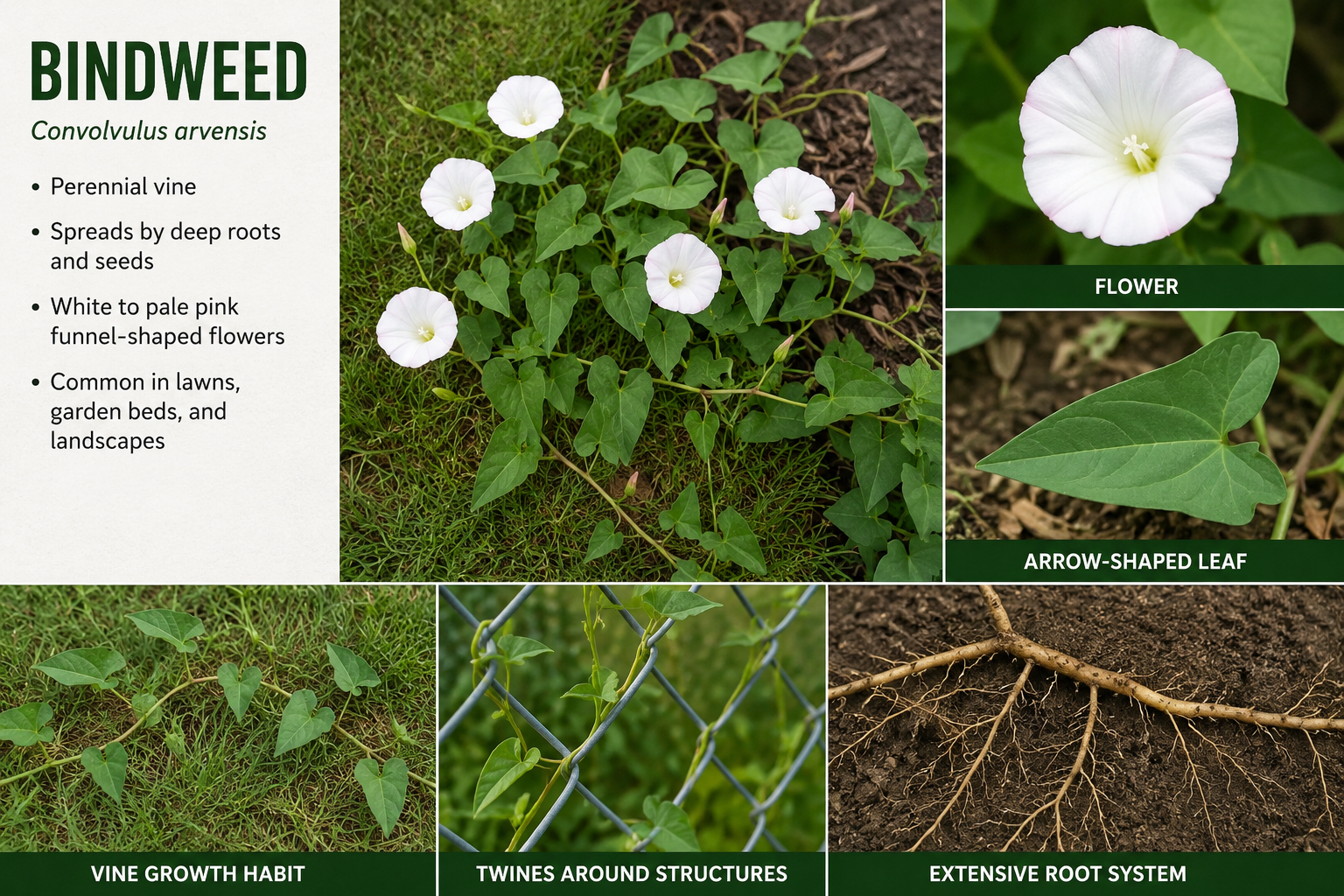
What Is Bindweed?
Field bindweed is a perennial vine that spreads aggressively through both seeds and underground root systems.
It produces small white or pink trumpet-shaped flowers that may look attractive at first, but don't let the blooms fool you. Beneath the surface, bindweed develops an extensive root system that can reach depths of 20 feet or more.
This allows the plant to survive drought, mowing, pulling, and many common weed control attempts.
Why Is Bindweed Such a Problem?
Unlike many annual weeds that die off each year, bindweed returns season after season.
Common problems caused by bindweed include:
Choking out desirable plants
Competing for water and nutrients
Climbing fences, shrubs, and trees
Invading lawns and landscape beds
Spreading rapidly across properties
Many homeowners spend years fighting bindweed without realizing they are only removing the visible growth while the root system remains alive underground.
Why Pulling Bindweed Usually Doesn't Work
One of the biggest mistakes homeowners make is repeatedly pulling bindweed.
While pulling may temporarily improve appearance, it rarely eliminates the weed.
Even small root fragments left in the soil can regenerate into new plants.
In fact, repeated pulling often encourages homeowners to believe they're making progress, only to see the weed return again and again.
The Best Way to Control Bindweed
Successful bindweed management typically requires a long-term approach.
Effective strategies include:
Consistent Monitoring
New growth should be addressed quickly before the plant has an opportunity to strengthen its root reserves.
Proper Herbicide Applications
Timing matters. Certain applications are significantly more effective when bindweed is actively transporting nutrients into its root system.
Maintaining Healthy Turf
A thick, healthy lawn helps reduce opportunities for weeds to establish and spread.
Patience
Unfortunately, there is rarely a one-treatment solution. Most successful control programs require multiple treatments over time.
What Does Bindweed Look Like?
Common characteristics include:
Arrow-shaped leaves
Thin, twining vines
White or pink funnel-shaped flowers
Growth that wraps around nearby plants and structures
If you see a weed that seems to "crawl" through landscape beds or wrap around desirable plants, bindweed is a likely suspect.
How Turf Tamers Helps
At Turf Tamers Landscaping, we regularly help homeowners identify and manage difficult weeds throughout Fort Collins and Northern Colorado.
Our fertilization and weed control programs focus on both prevention and targeted treatment strategies designed to improve overall lawn health while addressing invasive weeds like bindweed.
If you're tired of fighting the same weed year after year, contact Turf Tamers Landscaping for a professional evaluation and customized treatment plan.
Sometimes the most effective solution isn't working harder—it's using the right strategy.